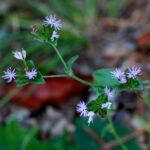
What a difference a month makes! We’ve gone from exceptional drought to the wettest July ever recorded. With some decent, soaking rains, the plants have started to come alive again. I am hoping that this rain will allow the plants to put some energy into making some flowers soon. What flowers can we expect in… Continue reading What Flowers Will Bloom Next Month? August 2026
Blogs
A Young Rabbit Visitor
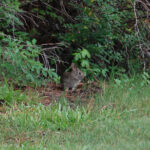
The young rabbits are just adorable! This was the scene in my back yard earlier this week. You can see how small this rabbit is compared to the adult close by. Cuteness overload!
Eastern Cauliflower Mushroom
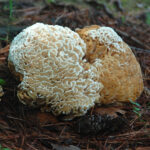
Look at this beautiful eastern cauliflower mushroom (Sparassis spathulata)! It is on the Hatcher Creek Greenway close to the dog park.
Quiet Nature- July 18, 2026
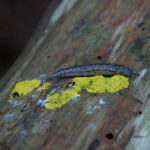
Enjoy some quiet nature today with a Carolina mantleslug (Philomycus carolinianus) on, and probably eating, dog vomit slime mold (Fuligo septica). This is the same log that had wolf’s milk slime mold on it last May.
Certified Wildlife Habitat at Church Street Park
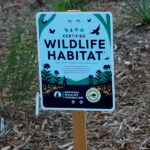
Have you seen the new Certified Wildlife Habitat at Church Street Park? Late last spring, the Town of Morrisville created a garden and added several dozen plants to the parking area in the new Southern Lot. Here is just a small sample of the many new plants in the park:
Sunflowers at Dix Park- July 2026
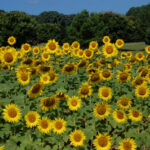
Dix Park in Raleigh announced that their sunflowers have started to bloom as of July 9th. Plan on going during the next two weeks if you want to see the beautiful field of golden blooms. If you are a bird watcher, there is an unusual bird at the park right now- a male painted bunting.… Continue reading Sunflowers at Dix Park- July 2026
What’s That? July 6, 2026
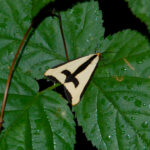
What is that? It’s a clymene moth (Haploa clymene). Have you ever seen this moth before? This is the first time I’ve ever seen one. I found it on the Shiloh Greenway early this morning. They are active both during the day and night, and are commonly found on the edge of the woods. Their… Continue reading What’s That? July 6, 2026
July 4, 2026
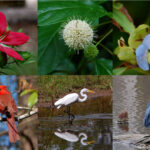
Some red, white and blue on America’s 250th birthday. Pictured: scarlet rose mallow, buttonbush, Virginia dayflower, male northern cardinal, great egret, little blue heron.
Field Report- June 30, 2026
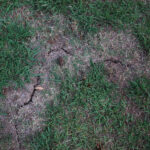
I haven’t done a field report for the month of June. I feel like every time I see a new flower in bloom, it’s gone pretty quickly. Blink, and you miss it. The picture of the dry, cracked ground above is yet another sign of our prolonged drought. I’ve been paying attention to the flowers… Continue reading Field Report- June 30, 2026
What Flowers Will Bloom Next Month? July 2026
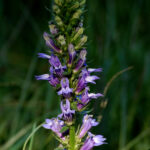
By the middle of summer, we typically have no shortage of flowers to look at. This year has certainly been different. The plants are still flowering, but much less than normal. The flowers either wither quickly, or the plants only put out a few blooms with what little energy they have from the lack of… Continue reading What Flowers Will Bloom Next Month? July 2026