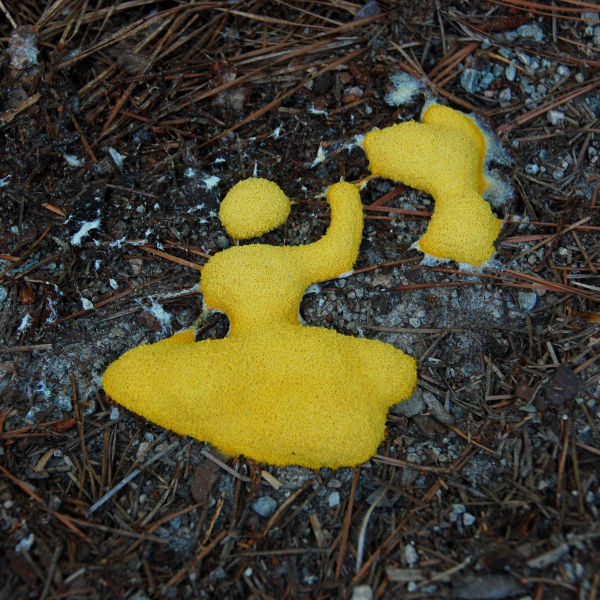
Have you ever seen slime mold? This one is Fuligo septica. Its common names include dog vomit slime mold and scrambled egg slime mold. At first the mold is bright yellow. As it matures, it turns brown or black. I found this one at the edge of the woods. I’ve seen it several times growing… Continue reading Slime Mold
Author: Jaclyn
this is in archive.phpthe description is : *** ***
Small White Asters
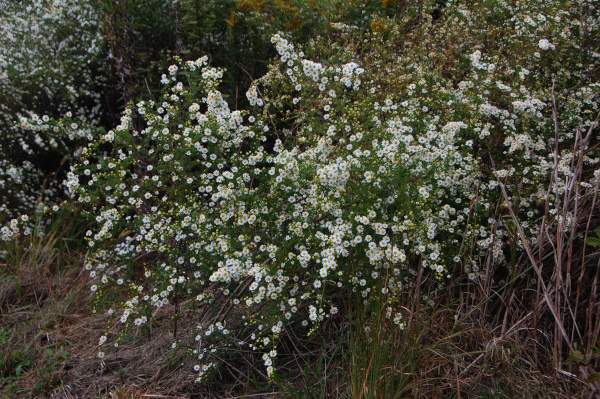
Have you seen the small white asters this fall? If you walk by them quickly, you’d think that they were all the same plant. But look carefully, and you’ll notice that there are several different white asters out there. Here are some of the more common asters in our area: Long-stalked aster (Symphyotrichum dumosum)- the… Continue reading Small White Asters
Some Plants Depend on Fungus for Nutrients
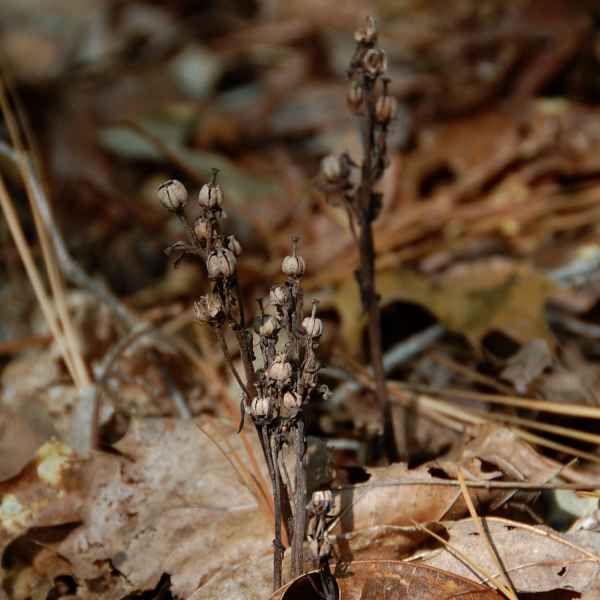
We ventured into the woods today to look at the seed heads of the cranefly orchids, and came across these dried up plants. They look pretty similar to striped wintergreen, but striped wintergreen doesn’t have so many flowers on one stem. With some research at home, we determined that this is pinesap (Monotropa hypopitys). Pinesap… Continue reading Some Plants Depend on Fungus for Nutrients
Sometimes Nature Comes to You
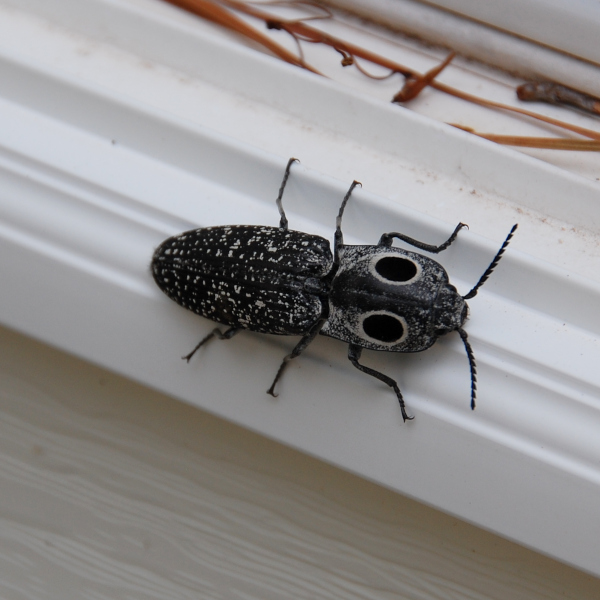
Sometimes nature comes to you! We sat down to eat lunch yesterday and heard a tap on the window. The bugs bump the window all the time, it was nothing unusual. As I passed by the window though, something caught my attention. Look at this bug! Have you ever seen anything like it? It’s an… Continue reading Sometimes Nature Comes to You
Speedwell Flower Identification

Speedwells are very common in our area. I’ve noticed four different types on the trails in Morrisville. Here is some information to help you identify them. All speedwells have four petals. Three petals are the same size, and one is slightly smaller. Bird’s eye speedwell (Veronica persica) is the first speedwell that I noticed. The… Continue reading Speedwell Flower Identification
Spotted Salamanders at the North Carolina Botanical Garden

This week, we visited the North Carolina Botanical Garden in Chapel Hill. Our intention was to find some spring ephemerals, and we were not disappointed. However, we were not expecting to get a lesson in the life cycle of spotted salamanders (Ambystoma maculatum). As we crossed the bridge into the Coastal Plain Habitat, we were… Continue reading Spotted Salamanders at the North Carolina Botanical Garden
Spring is Coming

Today, I walked through Carpenter Park and Morrisville Community Park. Officially, spring is still a few weeks away. Not only did it feel like spring today, it looked like spring as well. The flowers are blooming everywhere! This is a Japanese flowering apricot in Carpenter Park. It has been blooming for quite a while already.… Continue reading Spring is Coming
Stoke’s Aster

Have you ever seen Stoke’s aster (Stokesia laevis)? This aster is native to the coastal plain of South Carolina and Georgia, but is commonly planted in gardens. Bumble bees and butterflies are attracted to the flowers, and the plant is resistant to deer and rabbits. These beautiful blooms can be seen now at the American… Continue reading Stoke’s Aster
Sunflowers at Dix Park
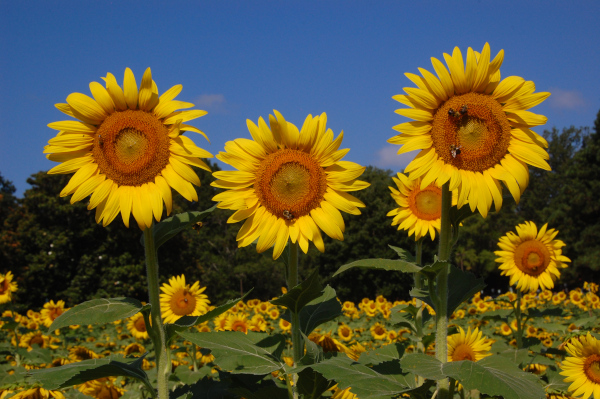
If you get a chance in the next week, take a walk around the sunflower field at Dix Park in Raleigh. There is plenty of parking, bathrooms are available, and there is a wheelchair accessible path through the field. The path around the field is a 0.4 mile loop. There is a smaller garden full… Continue reading Sunflowers at Dix Park
Surprise on the Trail

I came around a bend in the Shiloh Greenway yesterday and was surprised to see a group (a gaggle) of six geese walking up the trail toward me. Of course, the geese are very common around here, and I often see them on the Indian Creek Greenway at the trailhead by the water. When I… Continue reading Surprise on the Trail